Filtration
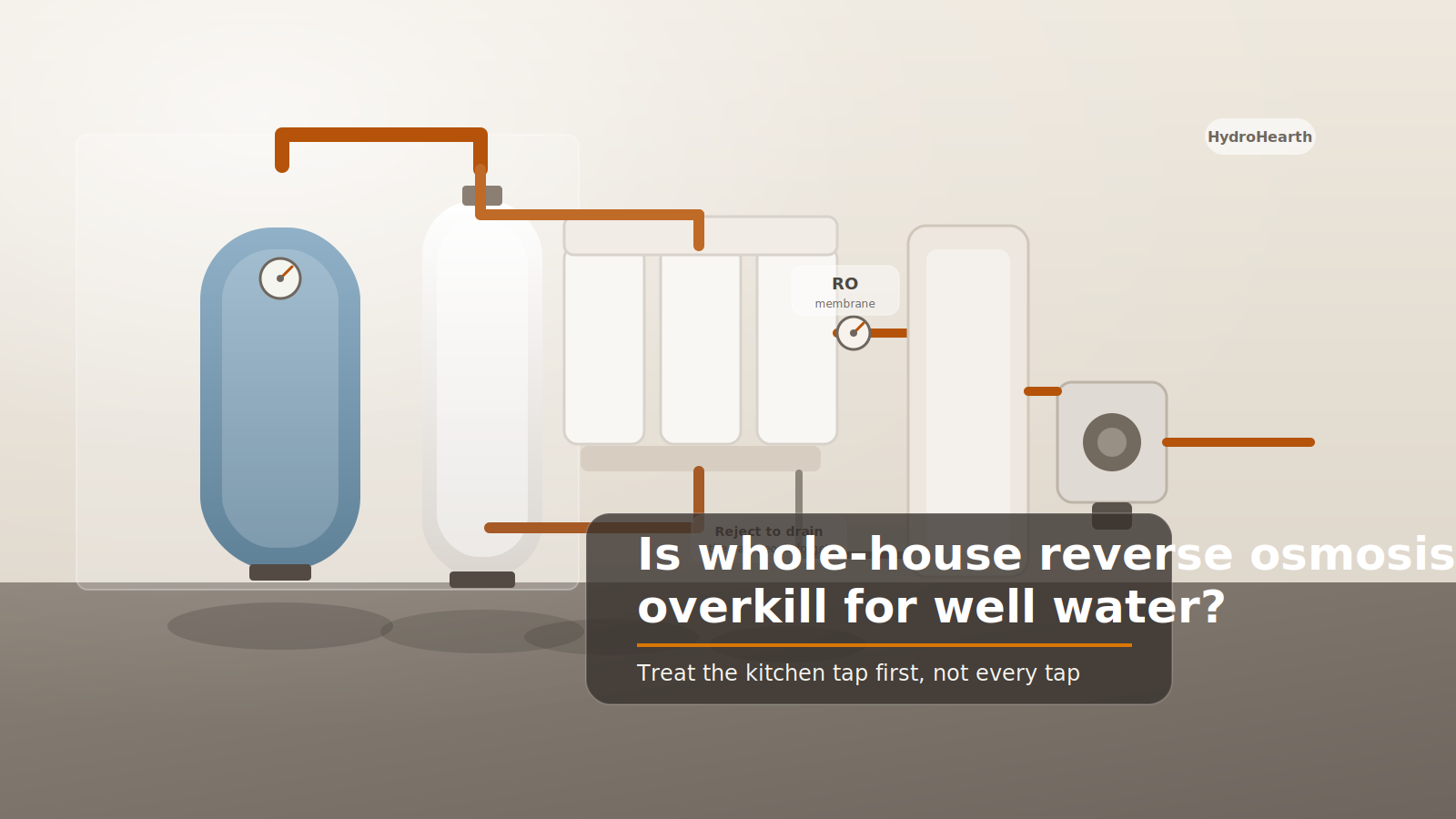
Is whole-house reverse osmosis overkill for well water?
Whole-house reverse osmosis makes sense on a few bad wells, but for most homes it is an expensive, high-waste answer to a one-tap problem.
7 min read
13 million U.S. households run on private wells with no municipal backup. When something goes wrong, the diagnosis starts with you.
Start with diagnosticsNo water, low pressure, discoloration, strange sounds -- start here when something goes wrong.
Explore →Iron, sulfur, manganese, hardness, bacteria. Match the right system to your actual water problem.
Explore →Pumps, pressure tanks, pressure switches, check valves -- what they do, how they fail, what they cost.
Explore →Shock chlorination, winterizing, testing schedules, filter changes. The work that prevents emergencies.
Explore →How your well and septic systems interact, setback distances, and treatment choices that affect both.
Explore →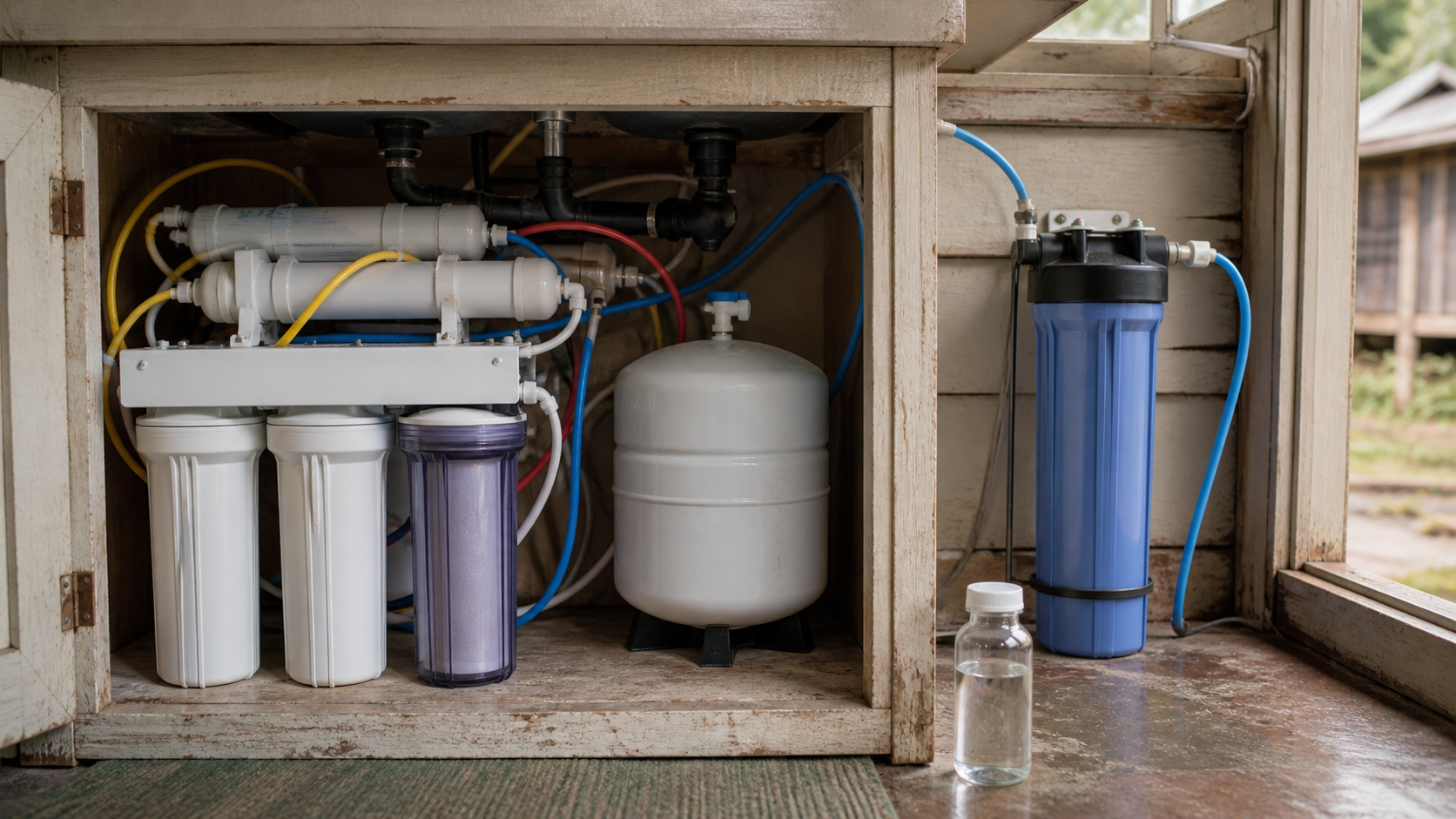
A practical, evidence-led guide to PFAS filtration for private wells: test first, choose a certified technology, size it correctly, and retest the water.
7 min read Whole-house reverse osmosis makes sense on a few bad wells, but for most homes it is an expensive, high-waste answer to a one-tap problem.
7 min read
Hardness, iron, manganese, and copper can wreck hair, irritate skin, and stain laundry. This guide shows how to tell which one is hitting your house and what actually fixes it.
12 min read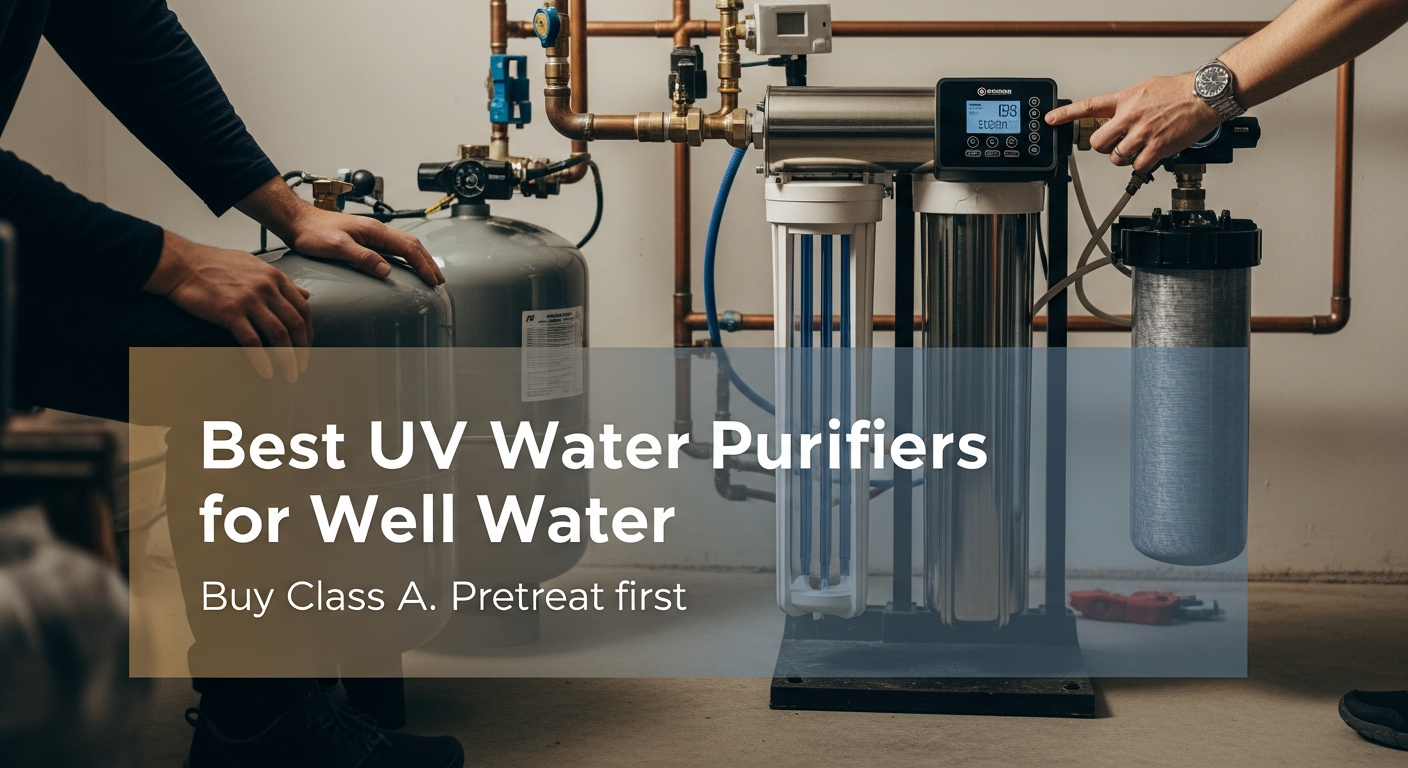
The best UV purifier for well water is a Class A unit sized to your real peak flow and installed after pretreatment. Here are the systems I would actually buy.
12 min read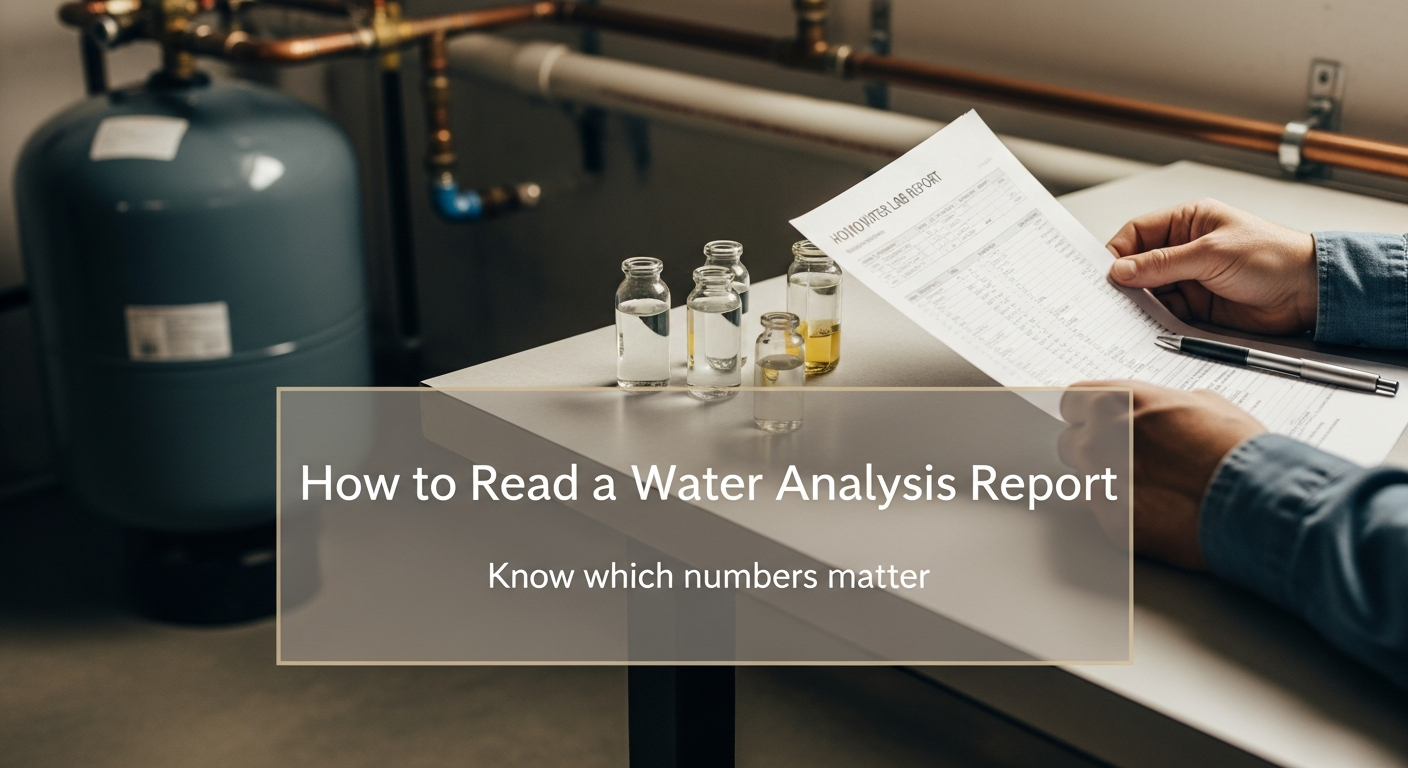
A plain-English guide to the lab terms, units, and cutoff numbers that tell you whether a well water result is urgent, cosmetic, or mostly a plumbing problem.
9 min read
Use home strips for trend checks. Use your own hands to collect a clean sample for the lab when the result affects health or treatment decisions.
8 min read