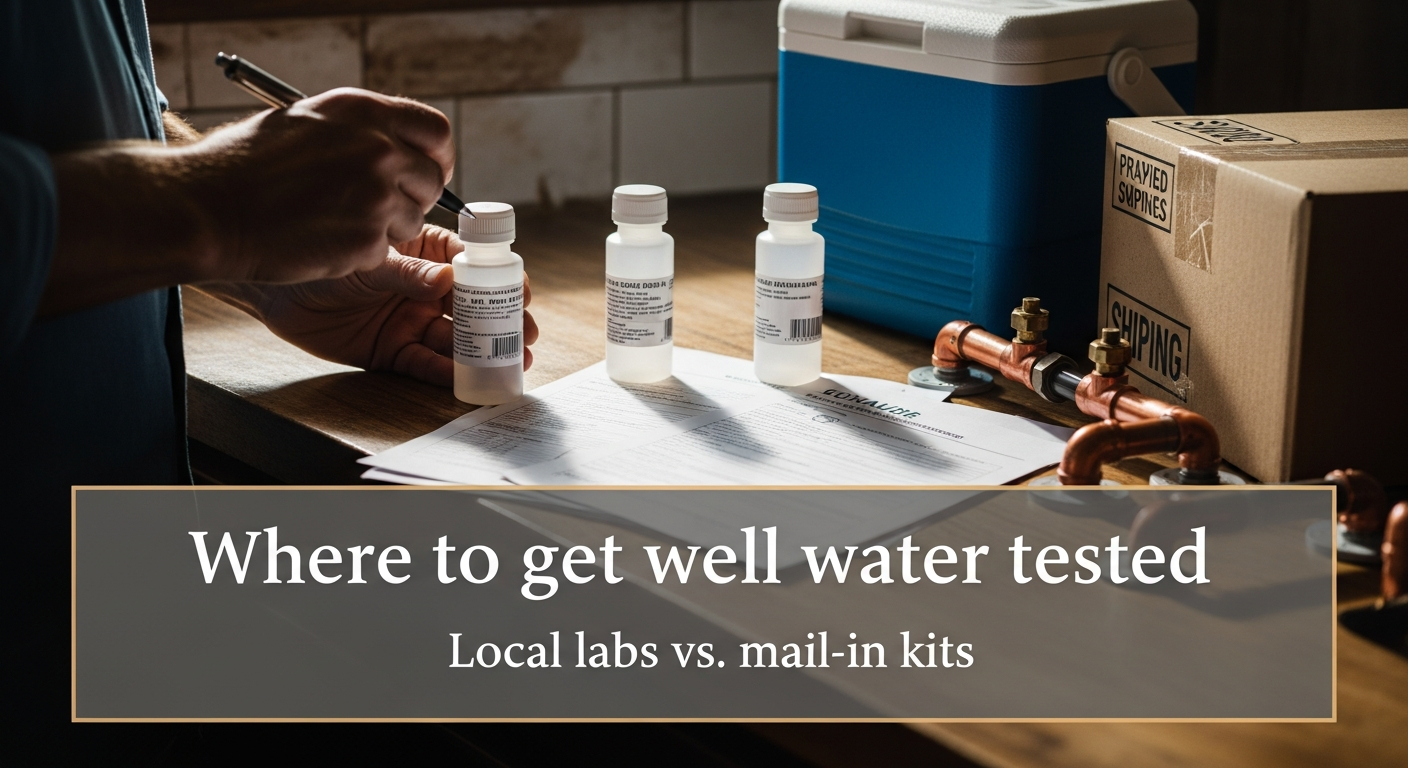
Where to get well water tested: local labs vs. mail-in kits
Updated April 15, 2026 — 8 min read
Where should you test your well water? Use a local certified lab or extension clinic when you need bacteria work handled fast, you are up against a home sale deadline, or you want advice tied to local geology. Use a mail-in kit when you want a broad baseline panel with less hassle. The bad option is not “local” or “mail-in.” The bad option is any test that is not tied to a certified or accredited drinking water lab.
I have done both. When I need a same-week answer on bacteria or a result I may need to hand to an inspector, I go local. When I want a broad snapshot without spending half my day driving sample bottles around, the mail-in model is easier.
Key takeaway
For coliform, E. coli, and other time-sensitive samples, local usually wins. For first-time baseline testing, a good mail-in kit is often the easiest path. Either way, verify the lab’s certification, the exact contaminants in the panel, and the sample deadline before you fill a single bottle.
When a local lab is the better choice
Start local if you are dealing with bacteria, flood recovery, or a real estate clock.
The EPA’s certified lab directory is still the best starting point for that search, and the CDC says the same thing after a contamination event: call your local health department or your state’s lab certification officer and get directed to a certified lab. That matters because accredited labs are not just running the test. As the Maine CDC notes, accreditation means known methods, recognized quality control, and somebody you can actually call when the report makes no sense.
The biggest reason local wins is timing. Penn State’s drinking water lab says bacteria samples have to reach the lab within 30 hours, and it will not accept Friday bacteria samples. That lines up with what well owners keep saying on forums too: Friday afternoon is a terrible time to collect a bacteria bottle. If the lab is closed, or the overnight box misses pickup, you just bought yourself a useless result.
Local also wins when the test has consequences beyond your own curiosity. If you are under contract on a house, working through a lender repair request, or trying to document a contamination problem after coliform bacteria in well water, you want a local certified lab with clear chain-of-custody rules and a phone number that answers. The same goes if you recently disinfected the well. CDC says to wait 7 to 10 days after chlorination, flush out the chlorine, and then sample for total coliform and E. coli. That is not the moment to improvise with a vague internet kit.
The other advantage is local context. County health departments and extension offices usually know what shows up in wells around you. Bedrock arsenic in New England. Nitrates near row-crop ground. Sulfur in limestone country. PFAS near bases and airports. If you are early in the process, that local knowledge helps you order the right panel instead of the longest panel.
When a mail-in kit makes more sense
Mail-in kits are the better play when convenience is the problem, not urgency.
This is where the Tap Score or SimpleLab model earns its keep. They send the bottles, packing, instructions, and return shipping materials. You collect the sample at home, ship it back, and get an online report that is usually easier to read than the average PDF from a small lab. For a first-time well owner who wants a broad baseline but does not have a nearby county lab, that is a real advantage.
Mail-in kits also tend to be better packaged for broad screening. If you want bacteria, nitrate, metals, hardness, and the usual aesthetic troublemakers in one order, a mail-in panel is often simpler than calling three different local offices to piece it together. That is especially true if you are trying to build the baseline we recommend in the ultimate guide to testing your well water.
But convenience is not the same as quality. I would skip any mail-in test that does not clearly name the lab, say whether that lab is certified or accredited for drinking water, and explain the shipping window in plain English. And I would absolutely skip the “free” tests from big-box retailers or water treatment dealers. Those are sales appointments dressed up as testing.
If you need a specialized panel, the answer can go either way. PFAS is the best example. A local lab can handle it if it offers the right method, and a mail-in service can handle it too. The question is not which one sounds fancier. The question is whether the lab is actually using the right method and whether the report will give you something useful. Our PFAS testing guide walks through that in detail.
The fastest way to decide
If your situation looks like this, do this:
| Situation | Best option | Why |
|---|---|---|
| You need a bacteria or E. coli result fast | Local certified lab | Less shipping risk, easier same-day dropoff, clearer handling rules |
| You are buying or selling a house with a well | Local certified lab | Better for deadlines, documentation, and follow-up questions |
| You want a first-ever baseline panel with minimum hassle | Mail-in kit | Easier ordering, packaging, shipping, and results dashboard |
| You do not live near a county lab or extension office | Mail-in kit | Saves time and usually bundles the common tests |
| You need PFAS or another specialty contaminant | Either one | Verify the lab method first, then choose the easier path |
| You want a “free” test from a dealer | Neither | That is a sales funnel, not an independent water test |
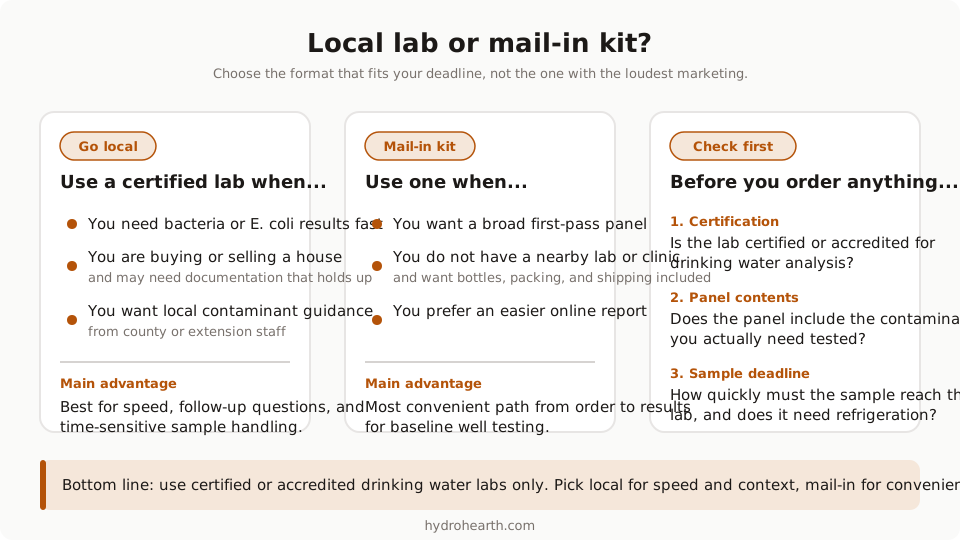
Three questions to ask before you spend money
1. Is the lab certified or accredited for drinking water?
This is non-negotiable. Use the EPA lab certification directory or ask your state program directly. If the seller cannot answer that question, keep your wallet closed.
2. What exactly is in the panel?
“Well water test” is not a real specification. Ask whether the panel includes total coliform, E. coli, nitrate, pH, and the local contaminants you actually care about. If you are near agriculture, that list may expand. If you are near an airport or military base, it may include PFAS. If you are reading this during a home purchase, compare the panel against the concerns in the private well inspection checklist before you order.
3. How fast does the sample have to reach the lab?
This is the question people forget, and it is the one that ruins the most tests. Ask when to collect, whether the sample must stay cold, whether the lab processes on Fridays, and whether you need to remove faucet aerators before filling the bottle. A good lab answers those questions clearly. A sloppy one makes you guess.
Start with the full testing playbook
If this is your first real well water test, read the ultimate guide to testing your well water next. It covers what to test for, how often to test it, how to collect the sample correctly, and how to read the report without getting pushed into the wrong treatment system.
My rule of thumb
If I need speed, local context, or paperwork that may matter later, I use a local certified lab. If I need a broad first-pass panel and I want the easiest path from order to report, I use a mail-in kit.
That is the whole decision. Do not overcomplicate it. Pick the format that fits your situation, make sure the lab behind it is legitimate, and get the test done this week. Untested well water is a much bigger problem than choosing between two good testing paths.
Related guides
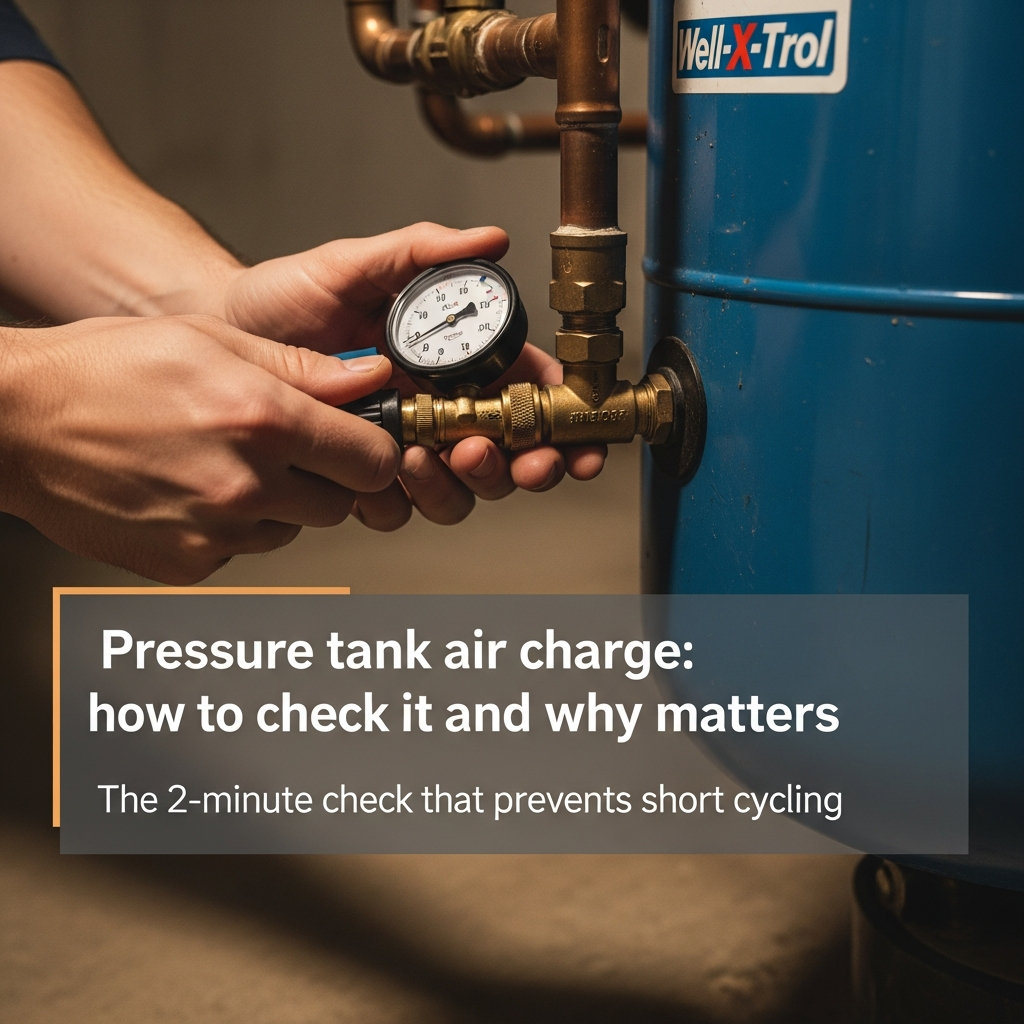
Pressure tank air charge: how to check it and why it matters
A 2-minute tire gauge check on your pressure tank's air charge can fix short cycling and pressure drops. Here's the step-by-step process.
6 min read
The well owner's guide to septic systems: what connects, what conflicts, and what to watch
How your private well and septic system interact, including required setback distances, contamination pathways, water softener discharge impacts, and the water tests that catch problems early.
12 min read
Arsenic in well water: health risks and removal methods
Arsenic in well water is invisible and tasteless. Here's what 10 micrograms per liter means, why arsenic III vs. V matters, and which treatment methods actually work.
9 min read