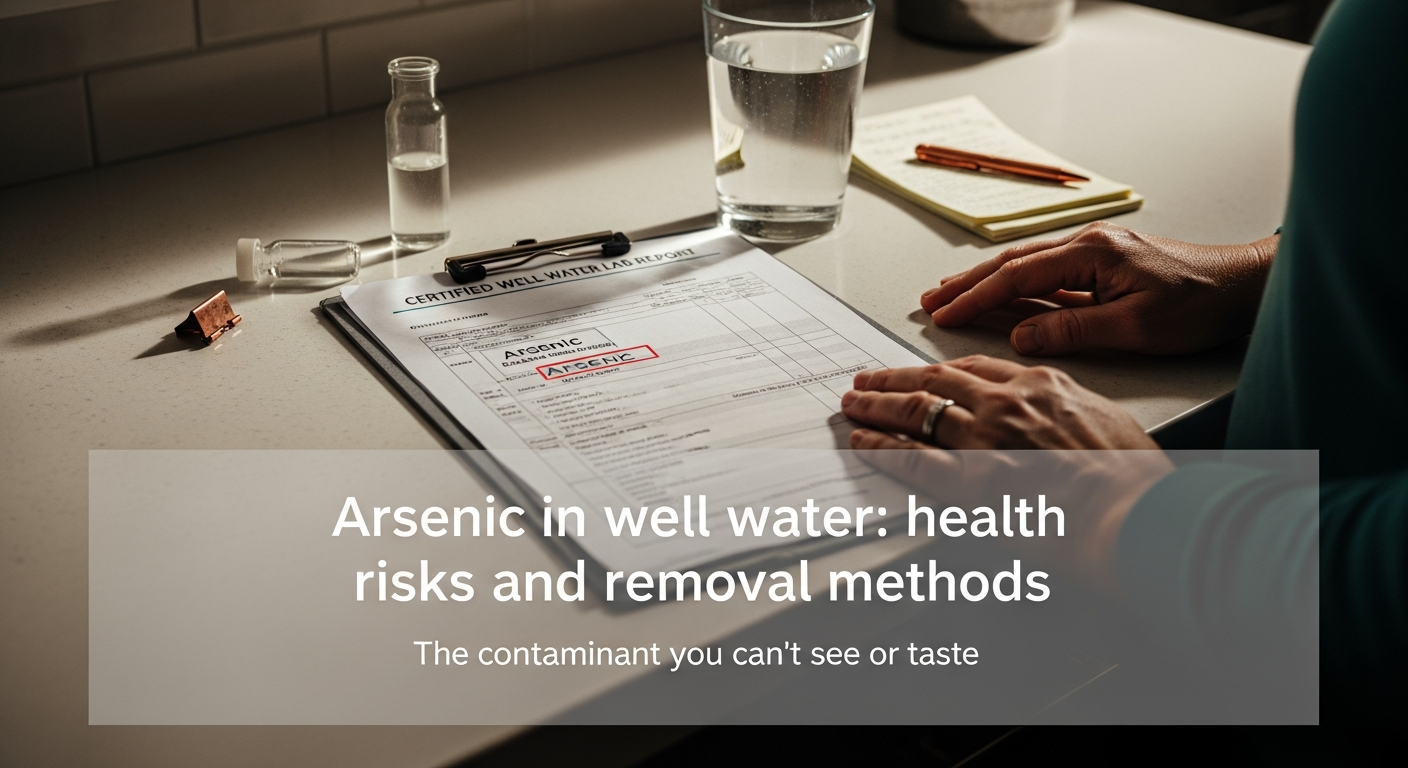
Arsenic in well water: health risks and removal methods
Updated March 30, 2026 — 9 min read
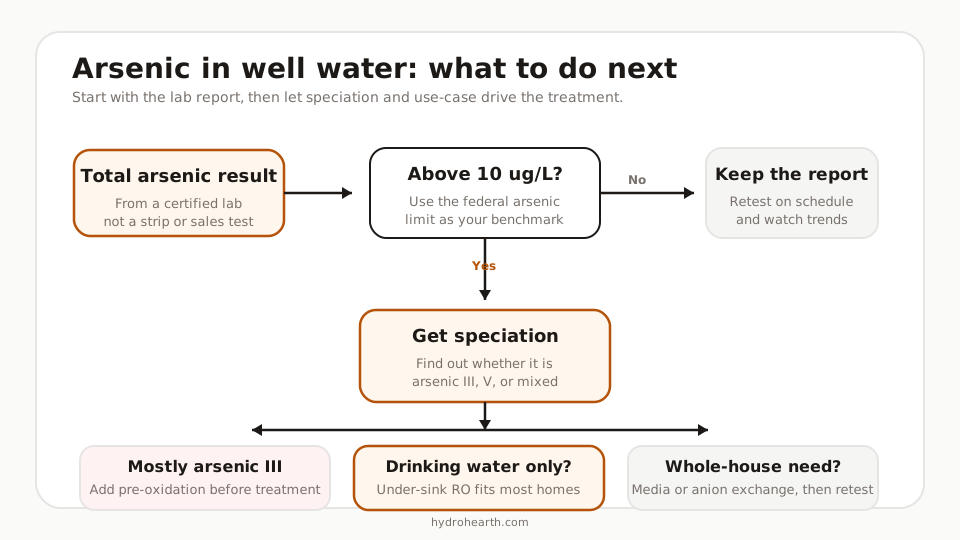
Arsenic in well water is serious because you cannot see it, smell it, or taste it. If a certified lab report shows arsenic above 10 micrograms per liter (the same as 10 ppb), stop using that water for drinking and cooking until you have a treatment plan. For most homes, the best first move is a certified reverse osmosis unit at the kitchen sink, but the right setup depends on whether your water contains arsenic III or arsenic V.
Key takeaway
Do not buy a filter just because the box says “heavy metal reduction.” Get a lab result, find out whether the arsenic is type III or type V, and choose treatment from there. That one detail is the difference between a filter that works and a four-figure mistake.
Why arsenic is a different kind of well water problem
Most well water problems announce themselves. Iron stains the toilet. Sulfur smells like rotten eggs. Tannins turn the water tea-brown. Arsenic does none of that. Clear water can still be contaminated.
That is why arsenic catches people off guard, especially during a home purchase. The water looks fine, everybody says the well has “always been good,” and then the lab report comes back at 14 or 22 micrograms per liter. If you are on a private well, nobody is testing it for you. The EPA rules apply to public systems, not your house. That responsibility sits with you.
Arsenic in well water is often geologic. Bedrock wells in parts of New England, the upper Midwest, the Rockies, and the Southwest are the classic risk zones. Historic pesticide use, mining, and industrial contamination can contribute too, but a lot of private-well arsenic is simply local rock chemistry doing what it does.
Long-term exposure is not something to shrug off. Inorganic arsenic is linked to higher risk of bladder, lung, and skin cancer, along with vascular problems and diabetes. This is not a “bad taste” contaminant. It is a health contaminant.
The number that matters: 10 micrograms per liter
The federal drinking water limit for arsenic is 10 micrograms per liter. If your well test is above that line, treat it as a real problem even though your well is not federally regulated.
Here is how I would think about the numbers:
- Under 10 micrograms per liter: good news, but keep the result on file and retest on a regular schedule.
- 10 to 25 micrograms per liter: you need treatment for drinking and cooking water.
- Well above 25 micrograms per liter: move faster, and expect the treatment discussion to get more technical.
If you are buying a house and the water test comes back over 10, that is not a “monitor it later” issue. It is a repair-credit negotiation issue. The private well inspection checklist covers how to use water test results before closing instead of inheriting the problem after.
Arsenic III vs. arsenic V is the part most homeowners miss
This is the detail that separates good advice from useless advice.
Arsenic in groundwater usually shows up in two inorganic forms:
- Arsenic III (arsenite) is harder to remove.
- Arsenic V (arsenate) is easier to remove because treatment media can grab onto it more effectively.
If a treatment company gives you a recommendation without asking about speciation, that is a red flag. “Total arsenic” tells you whether you have a problem. It does not tell you which treatment will solve it.
In practice, many arsenic III cases need a pre-oxidation step before reverse osmosis, adsorptive media, or anion exchange will work reliably. That oxidation step converts arsenic III into arsenic V. Sometimes that is handled by a dedicated oxidant feed. Sometimes an existing iron-treatment setup does part of the job. But you do not want to assume. You want treated-water lab results proving it.
One more wrinkle: arsenic often rides along with iron. If your water already has enough iron for an oxidizing iron filter to work well, some arsenic can come down with it because arsenic tends to bind to iron solids. Useful? Yes. Something to trust without retesting? No.
The treatment methods that actually work
For most houses, there are three realistic options and one “sometimes” option.
1. Point-of-use reverse osmosis
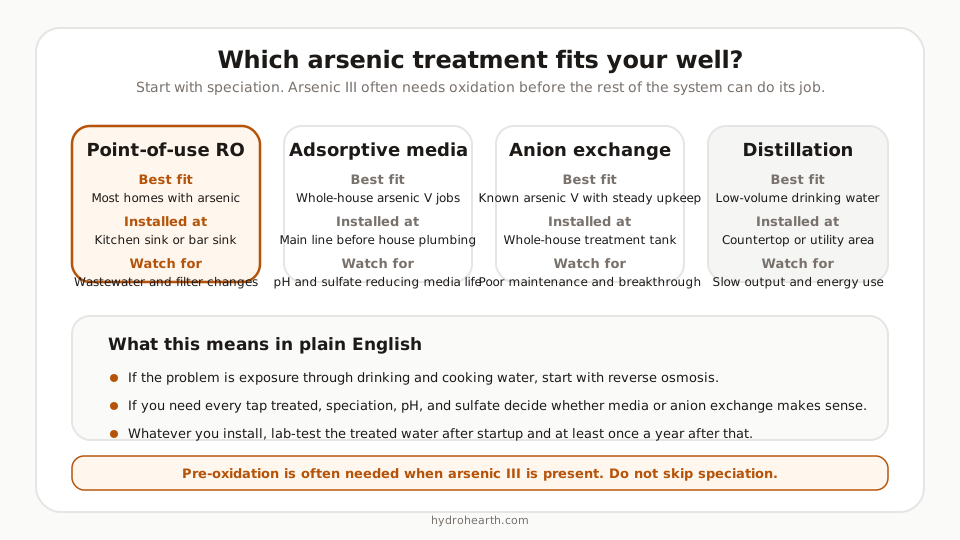
This is the best fit for most well owners. You install it under the kitchen sink and use it for drinking, cooking, coffee, baby formula, and ice.
That approach makes sense because arsenic is a health-risk contaminant, not a shower-floor contaminant. You do not need to spend whole-house money to protect every toilet and hose bib if the real exposure point is what goes into your body.
What reverse osmosis gets right:
- Strong arsenic reduction when the unit is certified for arsenic
- Lower upfront cost than whole-house treatment
- Also addresses other dissolved contaminants like nitrate, PFAS, and lead
What to watch:
- Arsenic III may need pre-oxidation
- RO creates wastewater
- Filters and membranes need regular replacement
If you go this route, look for a unit certified for arsenic reduction, not just taste and odor.
2. Adsorptive media
This is the whole-house option you will hear about most often for arsenic V. The water passes through a media bed that attracts arsenic and holds it there.
It can work very well, but the water chemistry matters. High pH, sulfate, and competing contaminants can shorten media life or reduce performance. That means the quote is only half the story. Ask how often the media will need replacement and what lab results that estimate is based on.
3. Anion exchange
Think of this as arsenic-specific resin treatment. It works best on arsenic V, not raw arsenic III, so again, speciation and pre-oxidation matter.
Anion exchange can make sense when you already need a whole-house solution and your installer knows exactly what is in the water. It is not a blind-buy system. If the resin is not maintained correctly, performance drops off, and some systems can dump a high concentration back into the water when they fail.
4. Distillation
Distillation works. It is just slower and less convenient than RO for most families. If you are treating a small amount of drinking water and do not mind the pace, it is a valid option. Most homeowners looking for a practical everyday fix still end up with RO.
What does not work
This is where money gets wasted:
- Standard sediment cartridges
- Brita-style carbon pitchers
- UV lights
- Shock chlorination
- Water softeners
Those products solve other problems. They do not solve arsenic. If a contractor is trying to roll arsenic into a generic “whole-house cleanup package” without explaining the arsenic chemistry, slow the conversation down.
What to test before and after you install treatment
Before you size anything, get these numbers:
- Total arsenic
- Arsenic III vs. V speciation
- Iron and manganese
- pH
- Sulfate
- TDS
That is the minimum useful conversation. The ultimate well water testing guide walks through how to get a proper lab panel, and the well water filtration guide covers how arsenic treatment fits into a bigger treatment train if you also have iron, hardness, sulfur, or PFAS.
Related
If your well is drilled into bedrock and arsenic shows up on the report, consider checking for radon in well water too. Those two problems can travel together in some geologies.
After treatment goes in, test the treated water. Then test it again at least annually. The mistake I see over and over is people assuming a filter is still working because the faucet flow looks normal. Arsenic gives you no warning when a system stops performing.
Your next step
If your latest test is over 10 micrograms per liter, switch to bottled or otherwise safe water for drinking and cooking today. Then order speciation testing or call a treatment company that will not size a system without it. In most homes, a certified under-sink RO unit is the right first quote to get.
And if you have never tested for arsenic at all, put that on this week’s list. Clear water proves nothing.
Related guides

Removing orange iron stains from white laundry
Iron in well water oxidizes during the wash cycle and deposits rust on fabric. Here's why bleach makes it worse, which products actually remove the stains, and how to stop them permanently.
9 min read
Well water during power outages: backup systems and emergency protocols
How to keep water flowing from a private well during a power outage -- generator sizing, battery backup, hand pumps, and the $35 prep that buys you 100 gallons.
11 min read
Where to get well water tested: local labs vs. mail-in kits
Use a local certified lab for bacteria samples, real estate deadlines, and local guidance. Use a mail-in kit for convenience and broad baseline screening.
8 min read