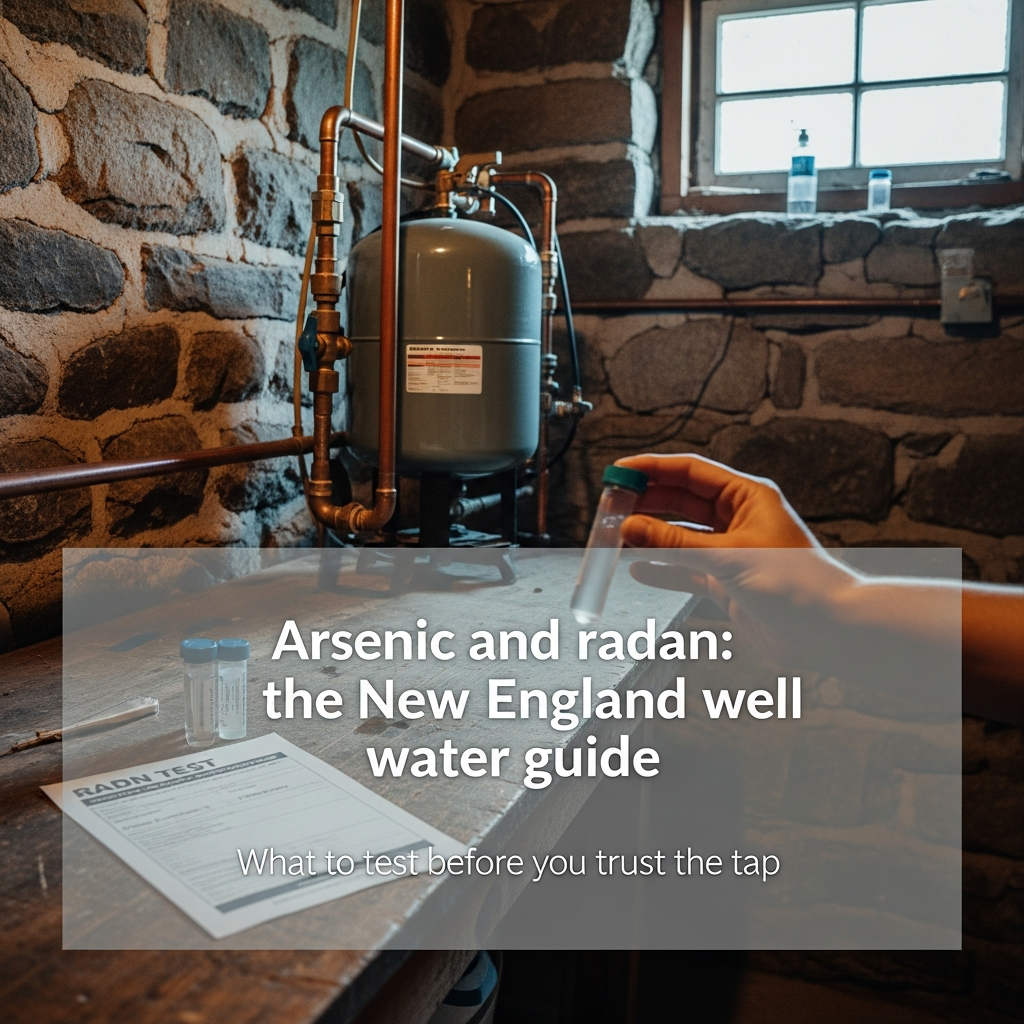
Arsenic and radon: the New England well water guide
Updated April 6, 2026 — 10 min read
If you own a private well in New England, assume arsenic and radon are possible until a lab proves otherwise. This region’s fractured bedrock is unusually good at putting both into groundwater, and neither contaminant announces itself with a smell, stain, or bad taste. The right first move is a certified arsenic test, a radon-in-water test if you’re on a drilled well, and an indoor air radon test on the lowest livable level.
Key takeaway
New England well owners waste a lot of money buying treatment equipment before they ever test for the contaminants that can actually change a home purchase or a treatment plan. Start with data. In this region, “the water looks fine” means almost nothing.
Why New England gets this combo more than most regions
USGS researchers built a regional model for bedrock wells in New England and found that 20% to 30% of private wells in eastern New England exceed the drinking water standard of 10 micrograms per liter for arsenic. Granite, schist, and other arsenic-bearing bedrock show up all over Maine, New Hampshire, Vermont, central and western Massachusetts, and parts of Connecticut and Rhode Island.
Radon rides along with the same bedrock story. Vermont Health puts it plainly: the major danger from radon in drinking water is lung cancer after the gas is released into indoor air and breathed in. That is why the shower, laundry, and dishwasher matter so much more than people assume.
New Hampshire is a good example of how widespread this can be. A USGS statewide mapping project found that more than half the state sits over groundwater with a 50% or greater probability of elevated radon, and the White Mountains region had some of the highest combined radon and uranium probabilities.
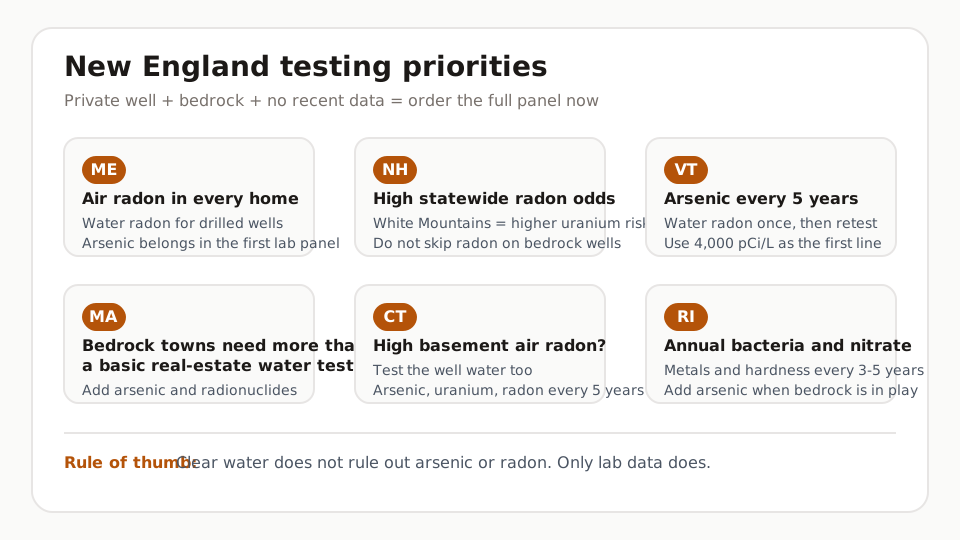
State guidance differs at the margins, but the pattern is obvious
Every New England state words it a little differently. None of them treat arsenic and radon like fringe contaminants.
| State | What the official guidance emphasizes | Practical move |
|---|---|---|
| Maine | Air radon for every home, water radon for drilled wells, and arsenic in the standard private-well conversation | If you’re on bedrock, test air and water together |
| New Hampshire | High statewide radon probability, especially in north-central bedrock regions | Do not treat radon as optional just because the water looks normal |
| Vermont | Arsenic on a five-year cycle and water radon retesting if earlier results were below the action line | Do not make radon a one-time test |
| Massachusetts | Bedrock-well arsenic and radionuclide risk is mapped closely enough that USGS built town-level models for it | Add arsenic and radionuclides when your town packet is too basic |
| Connecticut | Arsenic, uranium, and radon at least once and ideally every five years; test water if basement air radon is high | High indoor air radon means your well water may be part of the load |
| Rhode Island | Annual bacteria and nitrate testing, then broader metals and minerals every three to five years | Keep the routine schedule and add arsenic/radon when bedrock or home-sale risk is in play |
If you want the exact state instructions, start with Maine’s radon program, Vermont’s radon-in-drinking-water page, Connecticut’s residential well testing sheet, and Rhode Island’s drinking-water testing page. Those pages differ at the margins, but none of them say, “Don’t worry unless the water tastes weird.”
The three-test bundle I would order this week
If I owned a New England bedrock well and had no recent lab data, I would order this bundle first:
- A certified lab panel with arsenic, pH, iron, manganese, hardness, and uranium or gross alpha if your lab offers it
- A radon-in-water test handled by a certified lab or state program
- A 48-hour indoor air radon test on the lowest livable level of the house
If you are buying a house, add the basics:
- Coliform and E. coli
- Nitrate
- A flow-rate test
- The well log and any treatment-service records
On GarageJournal and TractorByNet, the same regret keeps coming up: people test after closing, or after a baby arrives, or after a filter salesman has already pointed them toward the wrong system. A “free test” that only checks hardness and pH is how arsenic gets missed for years.
Related
If you need the full lab-and-kit breakdown, start with the ultimate guide to testing your well water. If you’re still under contract on the house, use the private well inspection checklist before the contingency clock runs out.
How to read the results without overreacting or underreacting
Arsenic
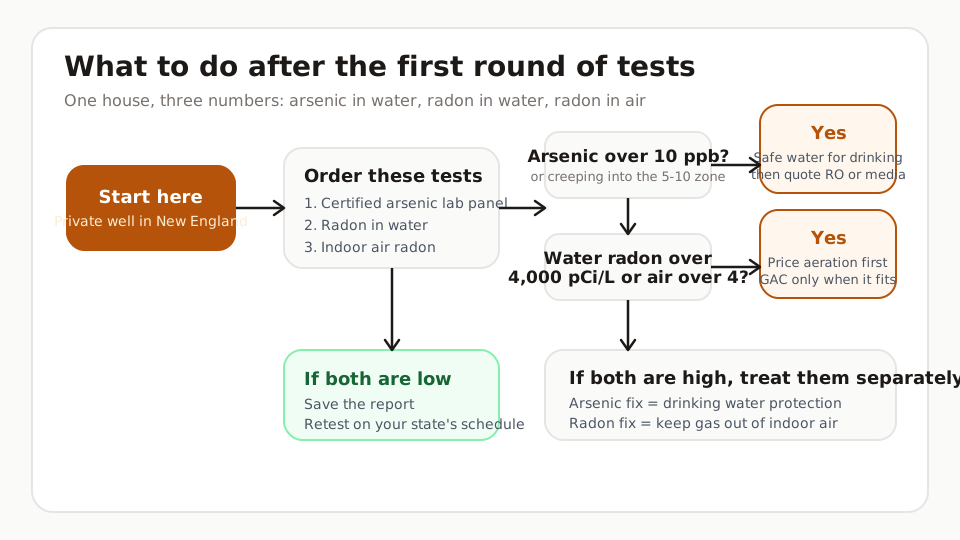
If your lab report shows arsenic above 10 ppb, stop using that water for drinking and cooking until you have a treatment plan. If the result comes back in the 5 to 10 ppb range, I still would not shrug it off in New England. Retest, confirm the lab method, and start getting treatment quotes.
For most homes, the best first quote is a certified under-sink reverse osmosis system. But the real answer still depends on whether you have arsenic III or arsenic V. That distinction matters enough that it gets its own article: arsenic in well water.
Radon
Maine’s guidance is a useful decision frame because it is blunt. If water radon is under 4,000 pCi/L, the state generally treats that as a low-priority result. From 4,000 to 10,000 pCi/L, Maine says reduction should be considered if indoor air radon is also high. Once you get above 10,000 pCi/L, you are in fix-it territory.
That matches what I would do in real life. Low water radon plus low air radon is a retest-and-monitor situation. High water radon plus high basement air radon is a system-design problem. Our full breakdown is here: radon in well water.
If both show up
Do not let anyone sell you one magic tank. Arsenic treatment is usually about protecting drinking and cooking water at the kitchen sink. Radon treatment is usually about keeping gas out of indoor air and is handled at the point of entry. They solve different problems in different parts of the house.
If you’re buying a New England house with a well
This is the part that gets missed all the time. The seller hands over a clean bacteria test from three years ago, everybody nods, and nobody asks about arsenic or radon because the faucets run and the water looks clear. That is not enough in this region.
Ask for four things:
- The most recent full lab panel, not just bacteria and nitrate
- The indoor air radon result for the basement or lowest level
- The well log
- Proof that any existing arsenic or radon treatment equipment has been retested after installation
If the seller only has a softener invoice or an old bacteria report, treat the well as unverified and run your own tests during the inspection window. The buying-house checklist covers the rest of the due-diligence items that matter before closing.
Your next move
Order three tests this week: arsenic, water radon, and indoor air radon. If the house is already yours, those numbers tell you whether you need treatment. If you’re still under contract, they tell you whether you need a credit before closing.
In New England, these are baseline tests for anyone on a private well.
Related guides
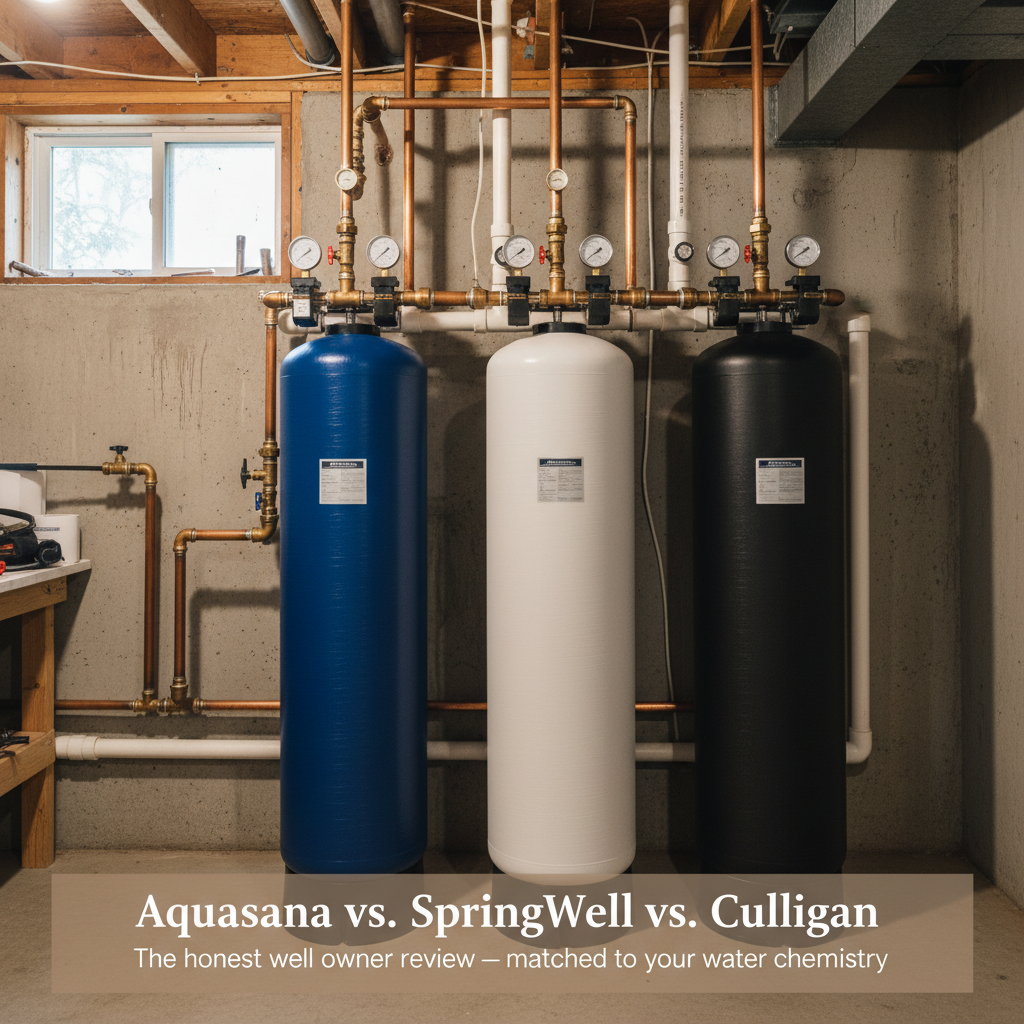
Aquasana vs. SpringWell vs. Culligan: the honest well owner's review
A side-by-side comparison of Aquasana, SpringWell, and Culligan whole house well water filtration systems -- what each actually handles, what it doesn't, and which one matches your water chemistry.
14 min read
Testing well water for PFAS: what you need to know before you order a kit
Standard well water tests don't detect PFAS. Here's how to test for forever chemicals, which lab kits actually work, what the results mean, and when you should be concerned.
11 min read
Chelating shampoo for hard well water: 5 products compared
Compare five shampoos for hard well water by disclosed mineral-focused ingredients, product positioning, and directly listed prices.
9 min read