Common well water contaminants and solutions
Updated April 13, 2026 — 11 min read
If your well water test just came back with words like arsenic, coliform, manganese, or PFAS, the hard part is figuring out which numbers mean “fix this now” and which ones mostly explain staining, smell, or plumbing damage. Private well owners do not get the automatic treatment and monitoring that city-water customers do. You are the utility.
Most wells do not have one neat problem either. The same report can show iron at 2.4 mg/L, pH at 6.2, and a positive coliform result after a week of hard rain. Treat the wrong problem first and you waste money fast. A softener will not fix tannins. A sediment cartridge will not fix arsenic. Shock chlorination will not fix nitrate.
Key takeaway
Sort every lab result into three buckets: health contaminants, nuisance contaminants, and corrosion or scaling problems. Health contaminants change what you should drink right now. Nuisance contaminants change how your water looks, smells, and treats your appliances. Corrosion and scaling problems determine what equipment has to go first in the treatment train.
The short version: what the most common contaminants mean
Use this table the way I do when a lab report lands in my inbox: identify the contaminant, decide whether it is urgent, then pick the first move that matches the chemistry instead of the symptom.
| Contaminant | What you usually notice | Number that gets my attention | First move | Deep guide |
|---|---|---|---|---|
| Coliform / E. coli | Often nothing obvious, sometimes after flooding, heavy rain, or recent well work | Any positive test | Stop guessing, shock chlorinate if appropriate, retest, inspect the wellhead | Coliform bacteria in well water |
| Nitrate | Usually nothing you can see, smell, or taste | Over 10 mg/L as nitrogen | Use a safe drinking-water source for infants and start source + treatment planning | Nitrates in well water |
| Arsenic | Nothing you can see, smell, or taste | Over 10 ug/L (10 ppb) | Get speciation if you do not already have it and price point-of-use RO first | Arsenic in well water |
| PFAS | Nothing you can see, smell, or taste | Any meaningful detection on a PFAS-specific panel | Order a dedicated PFAS test, then compare RO versus certified carbon | Testing well water for PFAS |
| Iron | Orange staining, rust rings, water that turns orange after sitting | Over 0.3 mg/L | Figure out whether it is clear-water, red-water, or iron bacteria before buying equipment | Best filters for iron bacteria |
| Manganese | Black staining, slimy black residue, metallic taste | Over 0.05 mg/L | Test alongside iron and pH; oxidation and filtration are usually the conversation | How to remove manganese from your well |
| Tannins | Tea-brown or yellow water that stays transparent | No health MCL; color above 15 units is widely found objectionable | Do not buy an iron filter blind; confirm tannins and look at tannin-specific treatment | How to treat tannins in well water |
| Hydrogen sulfide | Rotten egg smell | Any persistent odor | Check whether the smell is in hot water only or both hot and cold | Why your well water smells like rotten eggs |
| Hardness | Scale, soap scum, dull hair, rough laundry, crust on fixtures | Usually worth treating above 7 gpg | Match the softener size to your actual hardness and iron level | Water softener vs. iron filter |
| Low pH / corrosive water | Metallic taste, blue-green stains, pinhole leaks, green hair from copper | pH below 6.5 | Fix acidity first with a neutralizer before sizing downstream equipment | Why well water turns blonde hair green |
The contaminants that are dangerous even when the water looks fine
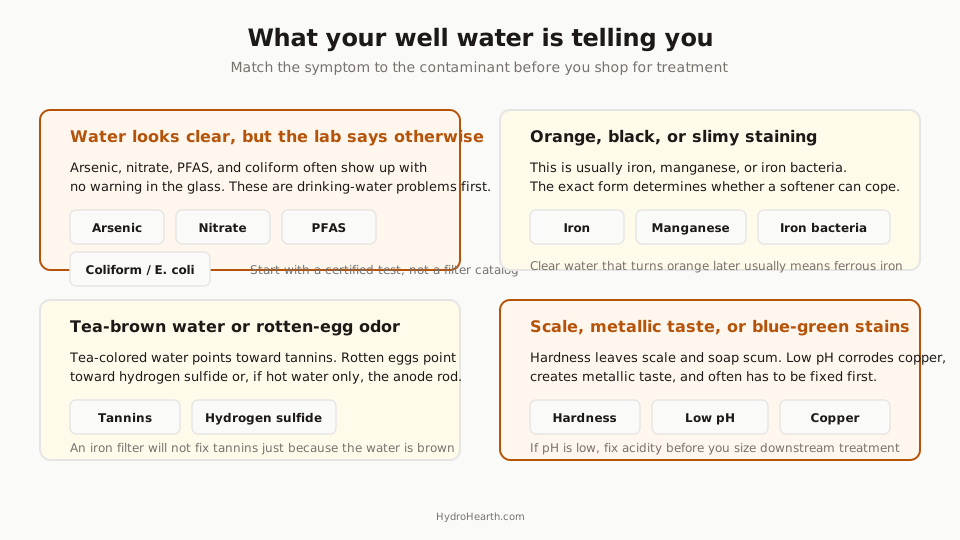
This is the part homeowners underestimate. The EPA’s private-well guidance says private wells do not get the same treatment and monitoring public systems do, which means a clear glass tells you almost nothing about safety.
Arsenic is the classic example. The EPA’s long-standing arsenic limit is 10 micrograms per liter, and arsenic is odorless and tasteless in water. If your lab result is above that line, I would stop using the water for drinking and cooking until you have a real treatment plan. In most houses that starts with point-of-use reverse osmosis, but arsenic III versus arsenic V matters enough that you do not want a contractor hand-waving past the speciation question.
Nitrate is the one that changes the conversation fastest if you have a baby in the house. The Minnesota Department of Health notes that the EPA drinking-water standard is 10 mg/L as nitrogen, and water above that level can cause methemoglobinemia, the oxygen-starvation problem better known as “blue baby syndrome.” They are also explicit that boiling makes nitrate more concentrated, not less. If nitrate is high, bottled or otherwise safe drinking water comes first, then source investigation and treatment.
PFAS moved from fringe concern to mainstream well-water issue once the EPA finalized the first national PFAS drinking-water rule on April 10, 2024. The agency set enforceable public-water limits of 4 parts per trillion for PFOA and PFOS, and as of May 14, 2025 said it would keep those two rules in place while reconsidering the others. Private wells are still not federally regulated, but those numbers are now the benchmark people use when a PFAS lab result comes back, and a standard county panel usually will not test for them. The full testing breakdown is in this PFAS guide.
Coliform bacteria and E. coli are different from the invisible chemical contaminants above, but they are just as easy to miss if you are judging by appearance. A positive coliform result does not always mean somebody is getting sick today. It does mean you have a contamination pathway that needs attention. Maybe the cap is compromised. Maybe the casing seal is shot. Maybe surface water made its way in after a storm. Either way, a positive bacteria test is never “probably nothing.”
Radionuclides are more regional, but they belong on the shortlist for bedrock wells. The EPA says private-well owners should test for radionuclides every three years. If you are on granite or other bedrock terrain and you have never tested, that gap is worth fixing.
Related
Need a proper lab panel before you price filters? Start with the ultimate guide to testing your well water. That is the bridge between “something is wrong” and “here is the exact system I need.”
The contaminants that announce themselves
The other bucket is the one homeowners know by sight, smell, or feel. These are not always health emergencies, but they absolutely matter because they stain fixtures, shorten appliance life, ruin laundry, and make people spend money on the wrong treatment.
Iron is the usual first suspect when you see orange rings in the toilet or rusty streaks on sinks and tubs. The EPA secondary standard is 0.3 mg/L. The Minnesota Department of Health breaks iron into three forms that matter in the real world: ferrous iron that runs clear and then turns orange after standing, ferric iron that is already red or yellow at the tap, and organic iron that comes bound up with organics and gets much harder to treat.
Manganese looks like iron’s meaner cousin. The EPA secondary standard is 0.05 mg/L, and the warning signs are black staining, dark slime, bitter metallic taste, and residue that makes fixtures look dirty again five minutes after you cleaned them. If there is also orange or brown goo in the toilet tank, start thinking about iron bacteria or mixed iron/manganese chemistry, not just a generic filter tank.
Tannins are where people get burned by assumptions. The water looks yellow-brown, like weak tea, so they buy an iron filter and nothing changes. The EPA’s secondary standards page says most people find color objectionable above 15 color units, but the bigger practical problem is that tannins often interfere with iron treatment. If the water stays transparent and tea-colored instead of settling out orange particles, tannins belong high on your list.
Hydrogen sulfide is the rotten-egg smell everybody remembers. The fix depends on one simple test: smell the cold water, then the hot. If both smell, the source is likely in the well water itself and you are usually discussing oxidation plus filtration. If only the hot water smells, the water heater anode rod jumps way up the suspect list and the fix can be dramatically cheaper. This sulfur guide walks through that fork in the road.
Hardness is not a contaminant in the same health-risk sense as arsenic or nitrate, but it is still a real problem. Scale on faucets, soap scum on shower glass, scratchy towels, dull hair, and a water heater full of mineral rock all trace back to calcium and magnesium. A softener is often the right answer, but not if iron is also present at levels that will foul the resin. That is how homeowners end up needing an iron filter before the softener.
Low pH belongs in this section because corrosive water behaves like an invisible plumbing thief. The EPA’s secondary standard range for pH is 6.5 to 8.5. Below that, you start seeing metallic taste, blue-green stains, copper pinhole leaks, and sometimes the exact copper issue that turns blonde hair green. If pH is low, the neutralizer usually comes first.
Match the fix to the contaminant, not to the symptom
This is where most four-figure mistakes happen. Homeowners shop by symptom, but treatment works by chemistry.
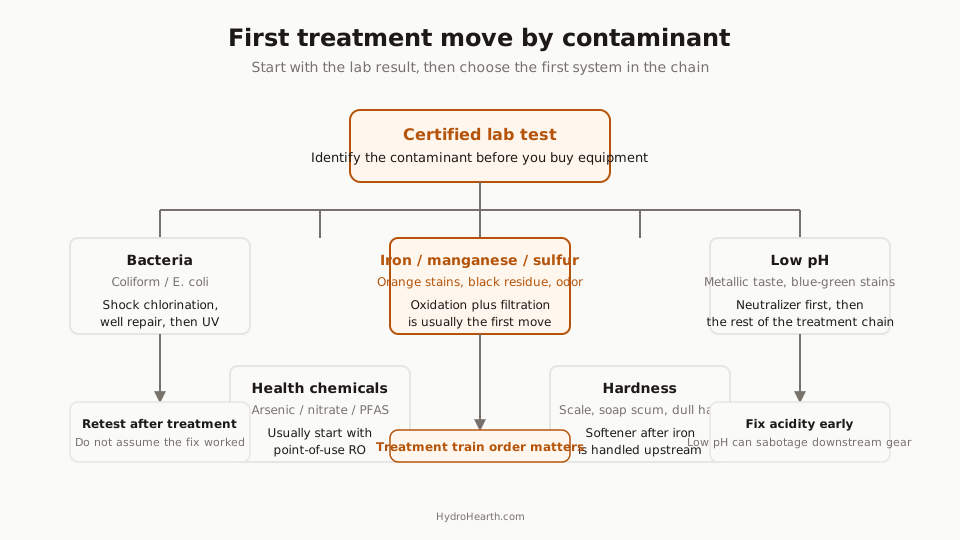
If the result is bacteria, the first conversation is about shock chlorination, well repair, and possibly UV or continuous disinfection. If the result is arsenic, nitrate, PFAS, or radionuclides, the first serious quote is often point-of-use reverse osmosis at the kitchen sink, because these are drinking-water contaminants more than shower contaminants. If the result is iron, manganese, or hydrogen sulfide, you are usually talking about oxidation plus filtration. If the result is hardness, a softener is often right, but only after you account for iron. If the result is low pH, an acid neutralizer belongs upstream of almost everything else.
The well water filtration guide goes deep on equipment, flow rates, and treatment order. The quick version is this:
- Health contaminants determine what you should drink now.
- Corrosion and pH issues often determine what has to be installed first.
- Iron, manganese, sulfur, and tannins determine the heavy lifting in the middle of the treatment train.
- Hardness usually gets treated after iron and manganese, not before.
That order is not theory. It is the difference between equipment that lasts 10 years and equipment that clogs, scales, or fails early.
When a lab report shows three problems at once
A common real-world example looks like this: pH 6.1, iron 1.8 mg/L, hardness 15 gpg, and intermittent coliform positives after storms. That is not one filter. That is a wellhead inspection, then usually an acid neutralizer, then iron treatment, then a softener, then possibly UV if the bacteria issue persists after the structural problem is fixed.
Another common example: nitrate at 12 mg/L, everything else mostly fine. That is not a whole-house iron tank. It is usually safe interim drinking water plus under-sink RO while you figure out whether the source is septic, agriculture, runoff, or a compromised shallow well.
This is why I push testing so hard. A $150 to $300 lab panel beats a $2,500 guess every time.
Your next move
Pull out your most recent water test and highlight four things: any positive bacteria result, any nitrate or arsenic number, any PFAS detection, and any pH below 6.5 or iron above 0.3 mg/L. That 60-second sort tells you whether you are dealing with a drinking-water safety issue, a nuisance issue, a plumbing-corrosion issue, or some combination of the three.
If you do not have a certified test from the last year, that is the move this week. Not a filter. Not a sales call. A test. The right treatment only gets obvious once the right numbers are on paper.
Related guides
Best UV water purifiers for well water (bacteria defense)
The best UV purifier for well water is a Class A unit sized to your real peak flow and installed after pretreatment. Here are the systems I would actually buy.
12 min read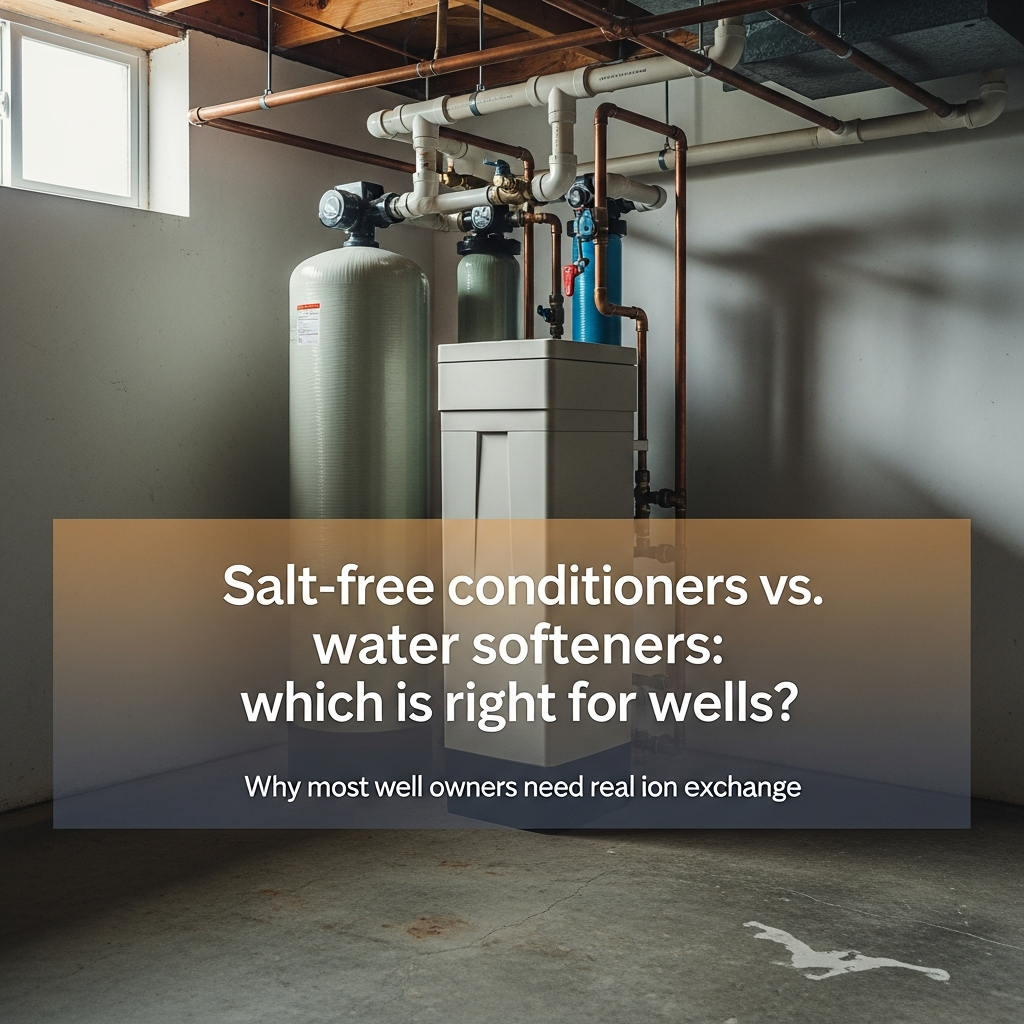
Salt-free conditioners vs. water softeners: which is right for wells?
Salt-free conditioners and water softeners solve different problems. Here's why most well owners need a real softener, and when a salt-free system actually makes sense.
7 min read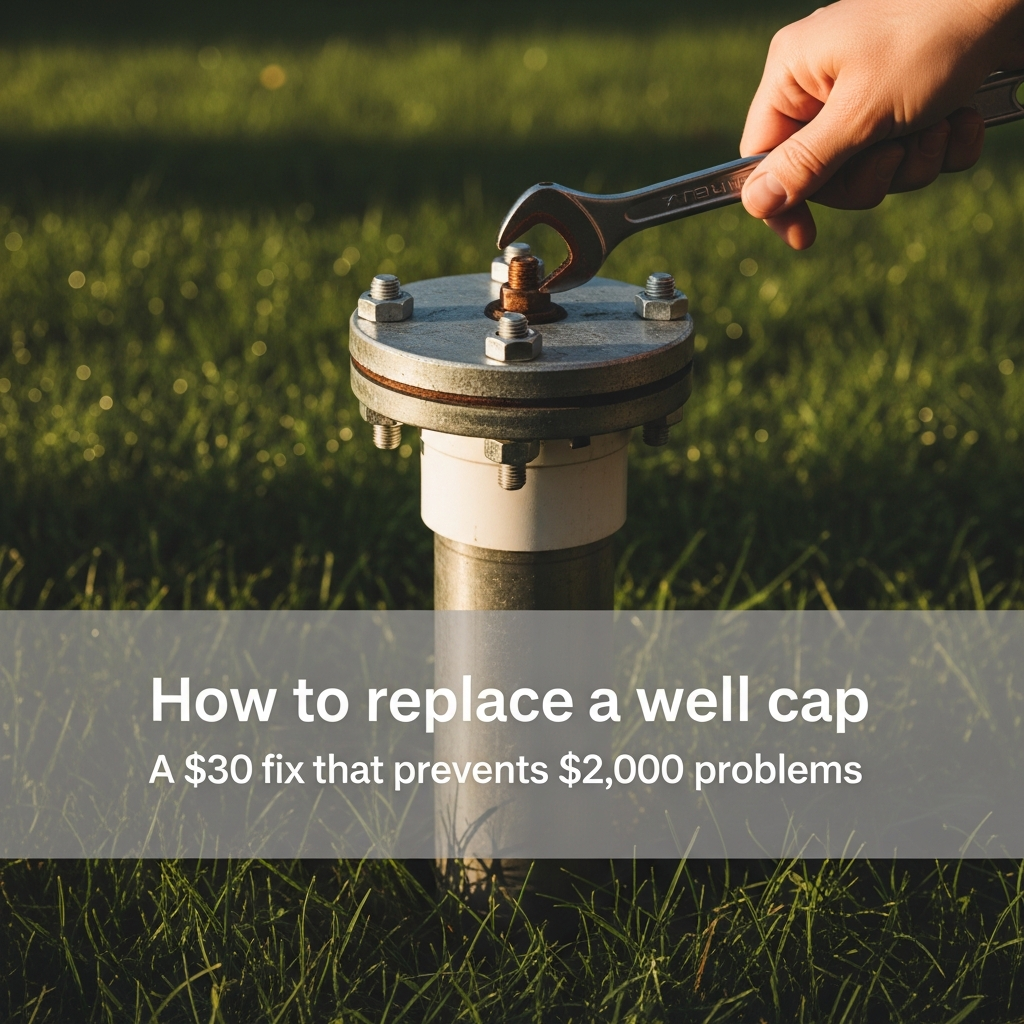
How to replace a well cap (and why a damaged cap is an emergency)
A cracked or loose well cap is the most common pathway for bacteria, insects, and surface water to enter your well. Here's how to inspect yours, measure for a replacement, and install it yourself.
6 min read