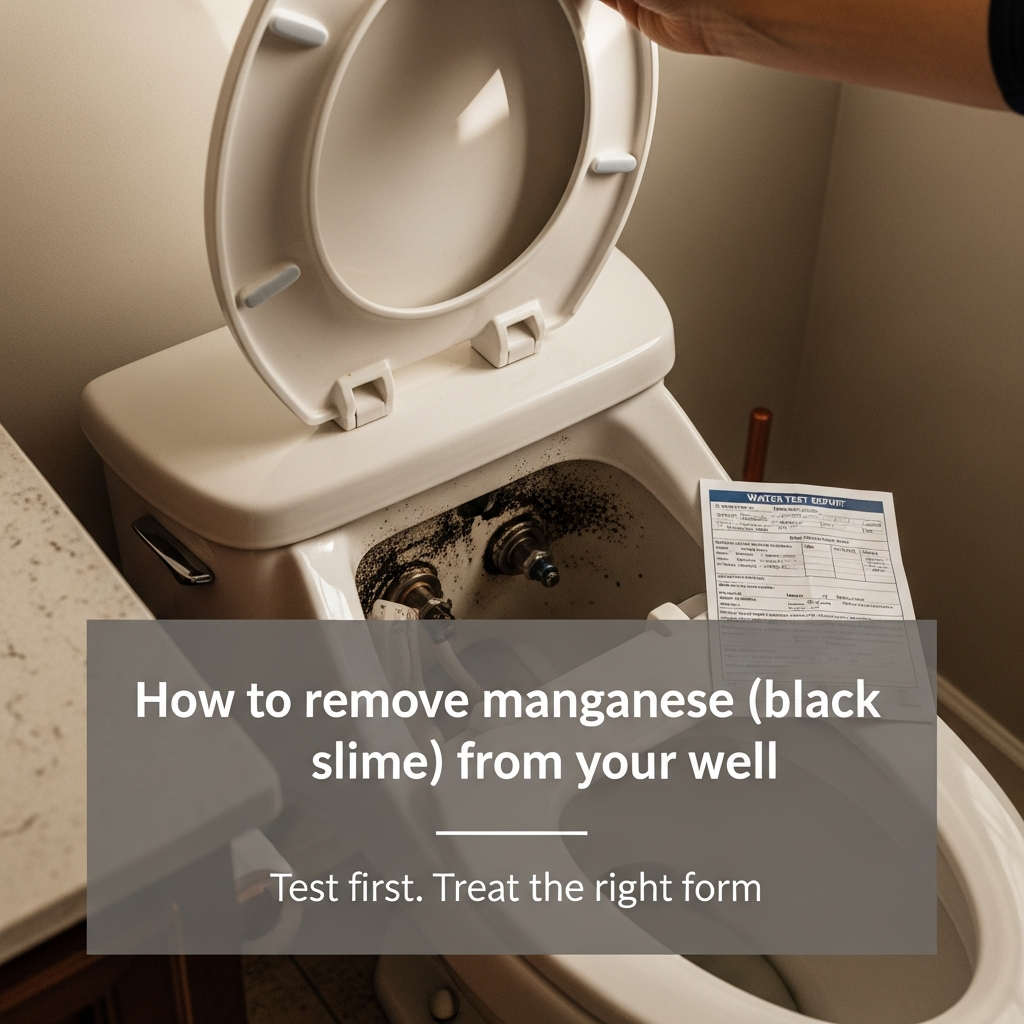
How to remove manganese (black slime) from your well
Updated April 3, 2026 — 10 min read
Black stains on sinks, a black ring in the toilet bowl, or water that turns dark after sitting usually means manganese is present in your well water. The fix depends on what form it is in. Dissolved manganese can often be handled by a softener or oxidizing filter, but black slime in a toilet tank often means manganese or iron bacteria, which needs disinfection before filtration.
Key takeaway
If your water is clear at the tap but turns black-brown after 20 to 30 minutes, think dissolved manganese. If the buildup in the toilet tank is slimy, think bacteria feeding on manganese or iron. Those are different problems, and buying the wrong filter for either one is how people waste a few grand.
What manganese in well water usually looks like
Manganese is a naturally occurring metal that shows up in groundwater, especially where oxygen is low. The EPA’s secondary drinking water standard for manganese is 0.05 mg/L, and that is enough to cause the classic symptoms: black to brown staining, bitter metallic taste, and dark buildup on fixtures.
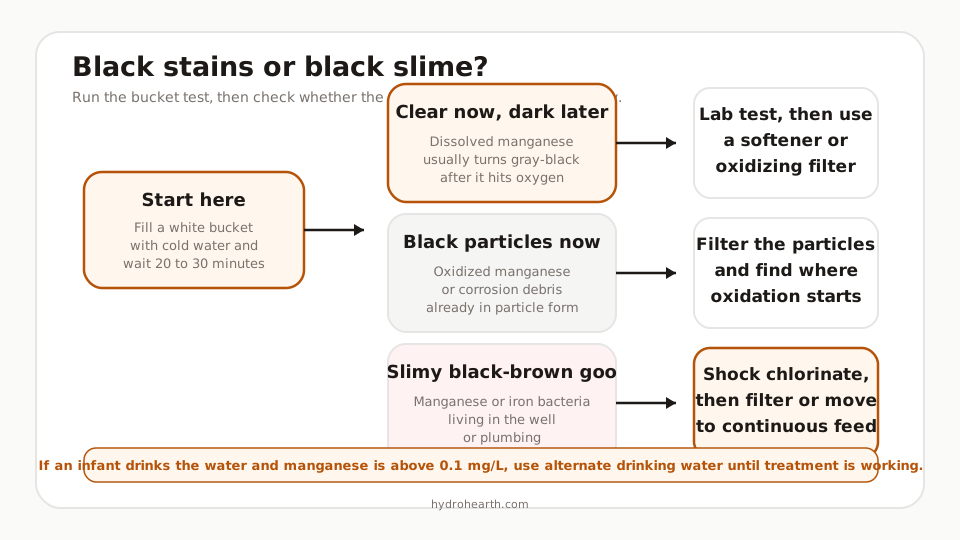
The part that confuses people is that manganese does not always look black right away. If it is dissolved, the water can come out clear and then darken after it hits air. That is why well owners keep describing the same pattern: clean-looking tap water, then a toilet tank, filter cartridge, or humidifier tray that turns dark fast.
| What you see | Most likely cause | What to do next |
|---|---|---|
| Water is clear at first, then turns dark gray or black | Dissolved manganese | Lab test, then size a softener or oxidizing filter |
| Black particles or dark water show up immediately | Oxidized manganese or corrosion debris | Use particle filtration and find where oxidation is happening |
| Black-brown slime coats the toilet tank or faucet parts | Manganese or iron bacteria | Disinfect first, then filter |
| Water stays tea-brown rather than black | Tannins, not manganese | Read the tannins guide |
If you want the bigger testing playbook, start with the ultimate guide to testing your well water. It keeps you from buying treatment based on a toilet ring and a guess.
The numbers that matter
For most adults, manganese shows up first as a nuisance contaminant. Stains. Taste. Dark residue. The EPA’s 0.05 mg/L benchmark is about appearance, not panic.
But there is a second number to pay attention to. The Minnesota Department of Health says water used for infant drinking or formula should stay at or below 100 micrograms per liter, which is the same as 0.1 mg/L. Its current manganese guidance uses 300 micrograms per liter, or 0.3 mg/L, for adults and households without infants drinking the tap water. Connecticut’s private well guidance uses the same 0.3 mg/L action level.
So here is the practical version:
- At 0.05 mg/L, you can start seeing black or brown staining.
- At 0.1 mg/L, take it seriously if a baby is drinking the water or formula is mixed with it.
- At 0.3 mg/L and up, stop treating it like a cosmetic problem and get a treatment plan in place for drinking and cooking water.
Bathing is different. Minnesota notes that manganese above guidance can be harmful to drink, but bathing or showering in it is not the same concern. This is a kitchen-faucet and formula-water conversation first.
What to test before you buy equipment
Do not shop treatment by symptom alone. Get a certified lab panel and include:
- manganese
- iron
- pH
- hardness
- total dissolved solids
- coliform bacteria if the problem is new or you see slime
- iron or manganese bacteria testing if the toilet tank has gelatinous buildup
That last piece matters. Connecticut’s private well guidance makes the distinction clearly: black-brown slime in toilet tanks points to iron or manganese bacteria, not just dissolved metal. A standard mineral filter can clean up the water for a while, but it will not control a bacterial colony living in the well or plumbing.
Related
If you have not tested yet, use the testing guide first. If you already have the lab report and need help designing the full treatment train, go to the well water filtration guide.
The treatment options that actually work
1. Water softener
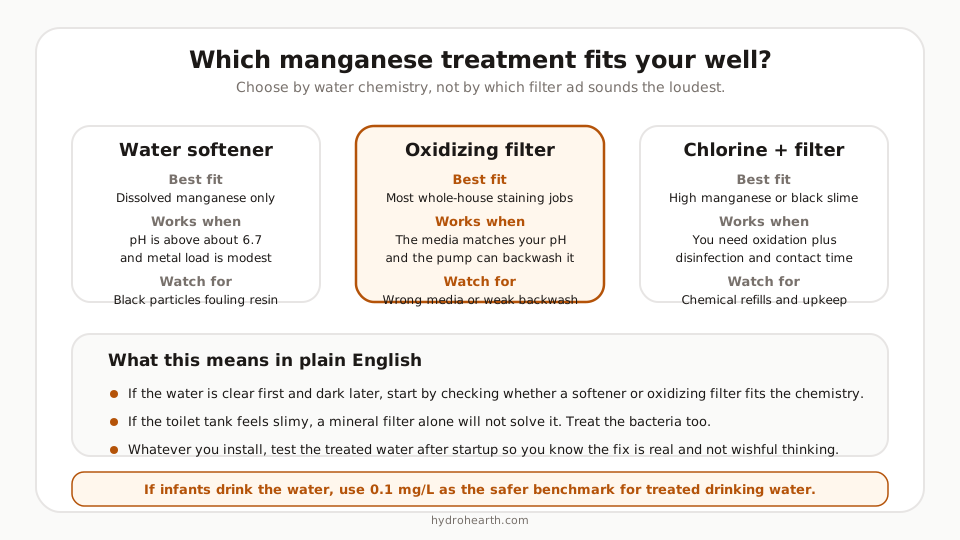
A softener can work when manganese is still dissolved and your combined iron plus manganese load is modest. Connecticut’s private well treatment table and Penn State Extension both treat ion exchange as a limited-use option, not a cure-all. It is generally a fit when combined iron and manganese stay under about 5 mg/L.
This is the part most homeowners miss: a softener handles dissolved metal ions, not black particles. If manganese has already oxidized before it reaches the resin bed, the resin fouls and the softener becomes an expensive paperweight. Our water softener vs. iron filter guide covers that failure mode in plain English.
2. Oxidizing filter
This is the best whole-house option for many manganese jobs. Manganese greensand, catalytic media, and other oxidizing filters convert dissolved manganese into particles and then trap them in the same tank. The catch is that manganese removal is pickier than iron removal. Media choice and pH matter a lot more than the average sales page admits.
Two things decide whether an oxidizing filter will actually work in your house:
- your pH
- your available backwash flow from the well pump
Miss either one and the media underperforms. That is why “best iron filter” shopping usually goes sideways on manganese problems. Manganese is harder to oxidize than iron.
3. Chlorination or another oxidant followed by filtration
If manganese is high, you have slime in the toilet tank, or manganese is riding along with iron bacteria or sulfur, step up to chemical oxidation plus filtration. Penn State and Connecticut both list chlorine or potassium permanganate followed by filtration as the heavy-duty option when levels are high or slime is involved.
This setup is more maintenance, but it solves the right problem:
- the oxidant converts dissolved manganese so it can be filtered out
- the disinfection step knocks back bacteria living in the well and plumbing
- the filter catches the oxidized solids before they hit the house
If your issue is clearly bacterial slime, start with the shock chlorination guide and the iron bacteria filter guide. Manganese bacteria problems behave a lot more like iron bacteria than like simple staining.
What usually does not work
These are the dead ends I see over and over:
- A plain sediment cartridge on dissolved manganese. It only catches particles.
- Activated carbon by itself. Good for taste and odor, lousy at fixing manganese staining.
- A softener on water that already contains black particles. The resin fouls.
- Buying a filter before you know the pH. Some media need neutral to alkaline water to work at all.
- Treating slime as “just minerals.” Slimy buildup usually means bacteria are part of the problem.
If your whites are staining, your toilet tank looks gross, and your water test is missing manganese, you are not ready to buy equipment yet. You are ready to test.
Your next step
Fill a white bucket with cold tap water and lift the lid off the nearest toilet tank today. That quick check tells you whether you are looking at dissolved manganese, oxidized particles, or slime-forming bacteria. Then get a certified test for manganese, iron, pH, and bacteria before you spend a dime on treatment.
Once you have the numbers, the decision gets a lot simpler. Softener for low-level dissolved manganese. Oxidizing filter for the middle ground. Chlorination plus filtration when the well has turned into a biology experiment.
Related guides

Buying a house with a private well: the inspection checklist
What to inspect, test, and negotiate before closing on a home with a private well. Flow rates, water quality, pump age, septic distances, and the contingency clause that protects you.
12 min read
How to choose the right filtration system for your well water
A water-chemistry-first guide to well water filtration by contaminant -- iron bacteria, sulfur, PFAS, manganese, and more. How to test your water, read the results, match each problem to the right filter technology, and build a treatment train that solves your specific issue.
14 min read
Arsenic in well water: health risks and removal methods
Arsenic in well water is invisible and tasteless. Here's what 10 micrograms per liter means, why arsenic III vs. V matters, and which treatment methods actually work.
9 min read