Removing orange iron stains from white laundry
Updated February 19, 2026 — 9 min read
Chlorine bleach makes iron stains worse. It oxidizes dissolved iron into rust particles and heat-sets them into the fabric. If you’ve been bleaching your whites and they keep getting more orange, that’s why. Stop using bleach on those loads immediately.
To remove existing iron stains, you need a reducing agent — a chemical that converts insoluble rust back into a soluble form that rinses away. Iron Out, Rit Rust Remover, and plain citric acid all work. The permanent fix is treating the iron in your water before it reaches the washing machine.
Here’s how to rescue your stained laundry, prevent it from happening again, and understand exactly what’s going on with your water.
Why your well water stains laundry orange
Iron dissolves into groundwater from the rock and soil your well passes through. This dissolved form — ferrous iron (Fe2+) — is invisible. Your water looks clear coming out of the tap.
The problem starts inside the washing machine. Warm water, agitation, and alkaline detergent accelerate a chemical reaction: dissolved ferrous iron oxidizes into ferric iron (Fe3+), which precipitates as ferric hydroxide — the orange-brown solid depositing onto your clothes. The EPA’s secondary standard for iron is 0.3 mg/L. Above that, staining begins:
| Iron level (mg/L) | What you’ll see |
|---|---|
| 0.3 - 1.0 | Faint yellow tinge on whites over time |
| 1.0 - 3.0 | Obvious orange staining after a few washes |
| 3.0 - 5.0 | Heavy staining; whites ruined in one or two loads |
| 5.0+ | Immediate rust-colored stains; water may look tinted |
If you haven’t tested your water recently, get a basic iron test. You need to know what you’re dealing with before you can fix it. Our well water filtration guide has a breakdown of which treatment matches which iron concentration.
Why bleach makes iron stains permanent
Chlorine bleach is an oxidizer, and iron stains are caused by oxidation. That’s the whole problem in one sentence.
Bleach works on organic stains (coffee, grass, wine) by breaking apart color molecules. Iron stains are inorganic. When bleach hits dissolved iron in your wash water, it forces MORE iron to oxidize into rust particles and deposit on fabric. The alkaline conditions cause that rust to bond harder with the fibers.
Clorox themselves acknowledge this: water with high iron levels “reacts with the bleach active and changes it to the chemical form as rust, which creates a yellow/red discoloration that deposits on clothes.” The University of Georgia Extension puts it bluntly: “Never treat rust stains with chlorine bleach, since it will only set them.”
If you’ve been bleaching iron-stained whites, you’ve likely set some stains permanently. Anything not yet heat-set in the dryer may still be salvageable. From this point forward: no chlorine bleach on any load washed with untreated well water.
Oxygen bleach (OxiClean, Clorox 2) is safer. Sodium percarbonate isn’t aggressive enough to oxidize iron the way sodium hypochlorite does. It won’t remove existing iron stains, but it won’t make them worse either.
Products that actually remove iron stains
Iron stain removers work on the opposite principle from bleach. Instead of oxidizing iron, they reduce it — converting insoluble rust back into soluble iron that dissolves into the water and rinses away. Here’s what works.
Iron Out (Super Iron Out)
This is the go-to product and the one I’ve had the best results with. The active ingredients are sodium hydrosulfite and sodium metabisulfite — both reducing agents that attack rust directly.
How to use it: Add 1/2 cup to warm water as the washer fills. Let it agitate for a minute, then pause the cycle and soak for 5 minutes. Add your regular detergent and run the full cycle. For heavy staining, increase to 1 cup and soak for 15-20 minutes.
Cost: About $7-9 for a 28 oz container, $14-17 for 76 oz. A single 28 oz container handles 8-10 rescue loads.
Warnings: Don’t combine Iron Out with bleach or OxiClean. It can fade colored fabrics, so use it on whites and light colors only. And it works best in warm water, not hot — excessive heat reduces its effectiveness.
Rit Rust Remover
A gentler option available at most grocery stores. It’s a powder packet that you add to the wash cycle.
How to use it: One packet per small or medium load, two for large loads. Add to the wash water before the clothes go in. Run a normal warm cycle.
Cost: About $3-5 per 2 oz packet. Less concentrated than Iron Out, so you’ll go through it faster with heavy staining.
Citric acid (bulk powder)
The most effective DIY option for whole-load treatment. Citric acid chelates iron atoms into soluble compounds that wash away.
How to use it: Add 2-4 tablespoons directly to the wash cycle with your detergent. For soaking individual items, dissolve 1 tablespoon per liter of warm water and soak for 2-4 hours. Available in bulk for $8-15 per pound at grocery stores or online.
Note: Citric acid has a mild bleaching effect, so it’s best on whites and very light colors.
DIY stain removal for individual items
If you have a few pieces with stubborn stains and don’t want to buy a specialty product, these household methods work on fresh-to-moderate iron stains.
Lemon juice and salt. This is the best natural method. Saturate the stain with fresh lemon juice, cover it with table salt, and rub gently. Lay the fabric in direct sunlight for 1-2 hours (the UV accelerates the reaction). Rinse with cold water and launder normally. The citric acid in the lemon juice chelates the iron. I’ve pulled stains out of white dish towels this way that I’d given up on.
White vinegar soak. Pour undiluted white vinegar directly on the stain and let it sit for 30 minutes to 2 hours. Weaker than citric acid, but it’s in your pantry right now. Best for light stains that haven’t been heat-set.
Cream of tartar paste. Mix 1 teaspoon cream of tartar, 1 teaspoon baking soda, and a few drops of hydrogen peroxide (3%) into a paste. Apply to the stain, wait 30 minutes, rinse, and launder. Good for spot treatment on small stains.
One rule applies to all of these: do not put the item in the dryer until the stain is gone. Dryer heat sets iron stains permanently. If the stain is still visible after treatment, repeat the process or try a stronger method. Air-dry until you’re sure.
The permanent fix: treat your water
Removing stains after every wash is a losing game. If your iron is above 0.3 mg/L — and it almost certainly is if you’re seeing staining — you need to treat the water before it reaches the washing machine.
The right system depends on your iron level, the type of iron in your water, and your pH.
Know your iron type first
Ferrous (clear water) iron: Water looks clear from the tap but stains appear during washing. Most common and most confusing. A water softener handles it up to about 3 mg/L.
Ferric (red water) iron: Water comes out already orange with visible particles. A sediment filter catches these since the iron has already precipitated.
Iron bacteria: Slimy biofilm, oily rainbow sheen, musty odor. Requires shock chlorination followed by ongoing disinfection. Not sure which type you have? Our troubleshooting guide walks you through the diagnosis.
Treatment by concentration
| Your iron level | Best treatment | Approximate cost |
|---|---|---|
| 0.3 - 3 mg/L | Water softener (ion exchange) | $800 - $2,500 installed |
| 3 - 10 mg/L | Air injection oxidizing filter (AIO) | $800 - $2,000 |
| 10+ mg/L | Chemical injection (chlorine or peroxide) + filter | $1,500 - $3,500 |
| Any level, ferric only | Whole-house sediment filter (5 micron) | $50 - $150 + $60-180/yr cartridges |
A few things people get wrong: softener resin fouls over time with iron, so if you have a softener and still see stains, your iron likely exceeds what the resin can handle. Adding 1/4 cup of Iron Out to your salt tank with every bag of salt extends resin life, but it’s a Band-Aid above 3 mg/L. Most iron filters also need a pH above 6.8 to work — if your water is acidic, an acid neutralizer comes first. Our filtration guide covers the full treatment train order. And sediment filters only catch ferric iron — if your water runs clear and stains develop later, the iron passes right through.
If you’re comparing brands, our Aquasana vs. SpringWell vs. Culligan comparison breaks down which systems handle iron at real-world concentrations. The short version: Aquasana tops out at 0.3 mg/L of iron. If you’re seeing stains, you’ve already exceeded that.
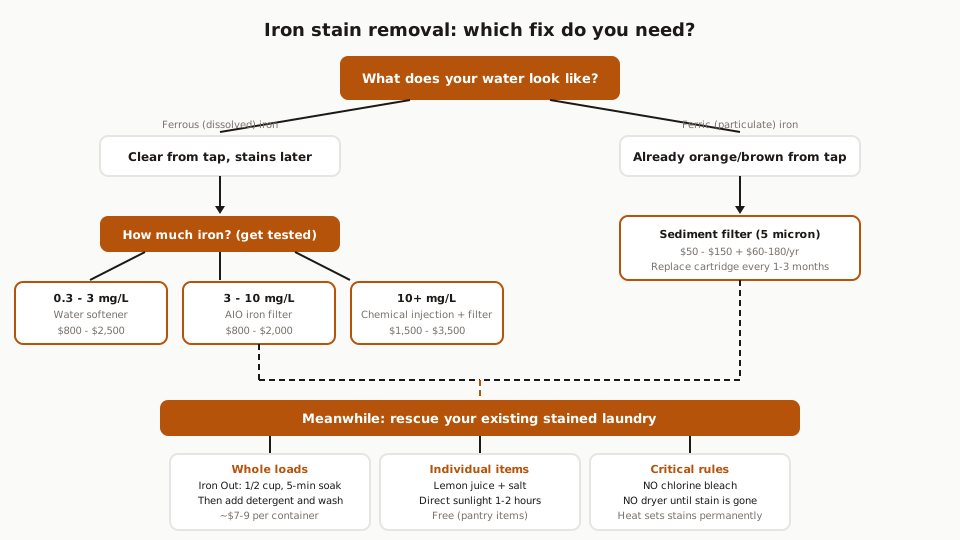
Quick-reference: the iron stain rescue protocol
- Stop using chlorine bleach. Switch to oxygen bleach (OxiClean) or skip bleach entirely.
- Don’t dry stained items. Heat sets the stains. Air-dry anything with visible staining.
- Treat the stains. Iron Out (1/2 cup, 5-minute soak) for whole loads. Lemon juice and salt for individual items.
- Get your water tested. A basic iron test from a state extension lab runs $15-30.
- Install the right treatment. Match the system to your iron level using the table above.
If you’re also dealing with well water affecting your hair, the same minerals causing your laundry stains are building up on your hair and scalp. Treating the water at the source fixes both. Our annual maintenance checklist covers monitoring aesthetic water issues so you catch changes early.
Your next move: test your water for iron if you haven’t in the last year. The products above will rescue your existing laundry, but the real fix is getting iron out of the water before it touches your clothes.
Related guides

The beauty guide for well owners: hair, skin & laundry
Hardness, iron, manganese, and copper can wreck hair, irritate skin, and stain laundry. This guide shows how to tell which one is hitting your house and what actually fixes it.
12 min read
The well owner's annual maintenance checklist
A season-by-season maintenance calendar for private well owners covering water testing, component inspections, winterization, and when to call a professional.
10 min read
Well water problems: troubleshooting no water, low pressure, rotten egg smell, and more
A diagnostic flowchart for every common well water symptom -- no water, low pressure, sputtering, brown water, sulfur smell (rotten eggs), and cycling pumps -- with step-by-step triage to identify whether it's the pump, tank, switch, or well itself.
12 min read